Participation of the Department of Inorganic Technology and Ecology of the SEI USUCT in the STEM Education Program
On November 13, 2025, the USUCT hosted another event within the framework of the STEM-education: it is better to see once than hear a hundred times program. The initiators and coordinators of the program are the director of the institute, Doctor of Chemical Sciences, Professor Olga Sverdlikovska, and the executive secretary of the selection committee of the Ukrainian State University of Chemical Technology, Doctor of Technical Sciences, Professor Margarita Skyba.
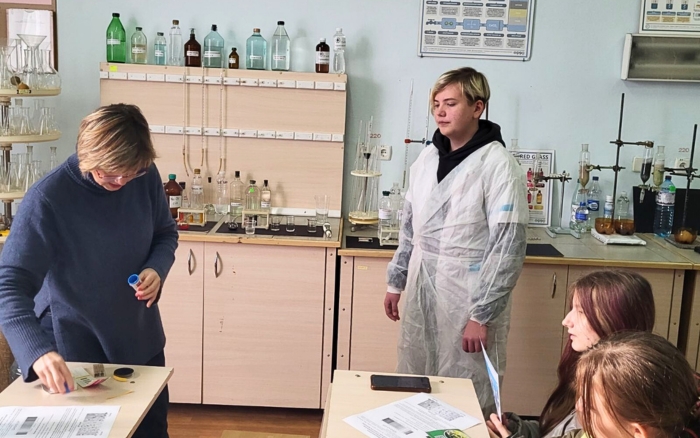
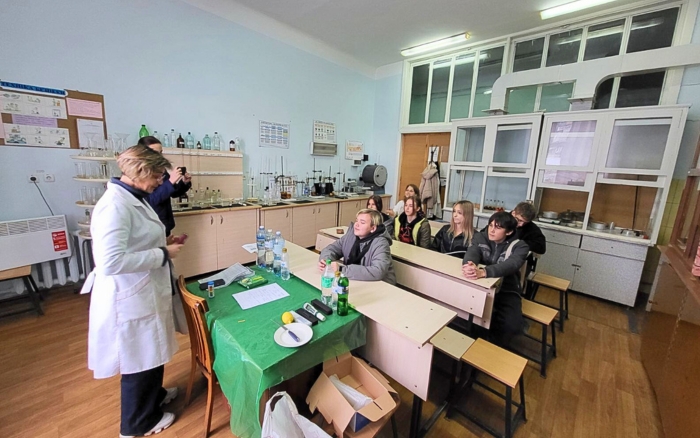
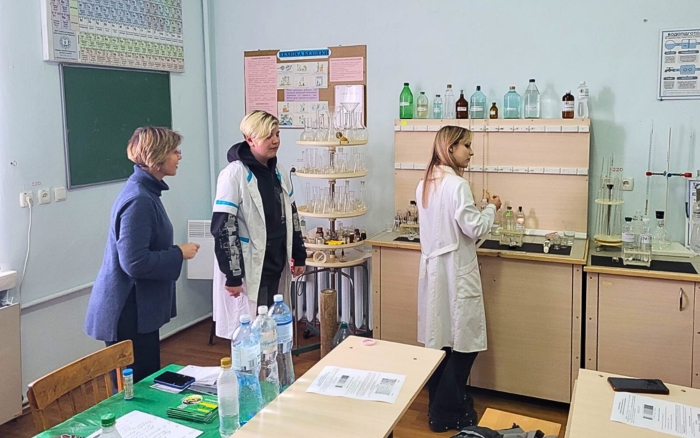
Schoolchildren visited the institute at the Department of Technology of Inorganic Substances and Ecology, who took part in a laboratory lesson on the topic “The concept of pH of a solution. pH value for the characteristics of an acidic or alkaline environment”. The experimental part was prepared by representatives of the department: head of the department, Doctor of Technical Sciences, Professor Ihor Kovalenko, Doctor of Technical Sciences, Professor Margarita Skyba, Ph.D., Assoc. Prof. Olena Gruzdeva and Ph.D., Assoc. Prof. Oleksiy Khlopytsky.
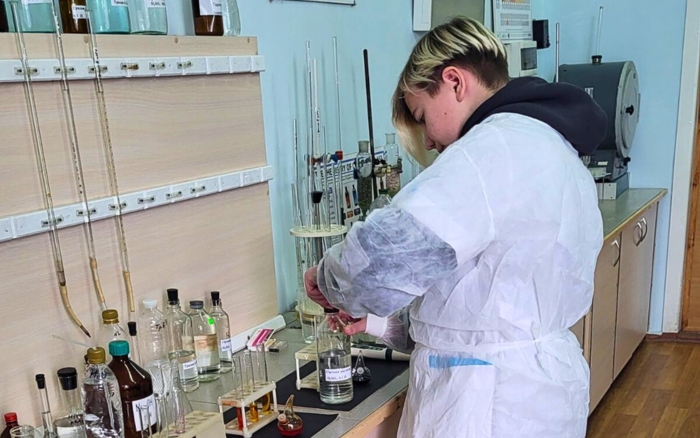
Students enthusiastically performed experiments and learned how water quality affects the properties and quality of the final product – from beverages to chemical and food products.
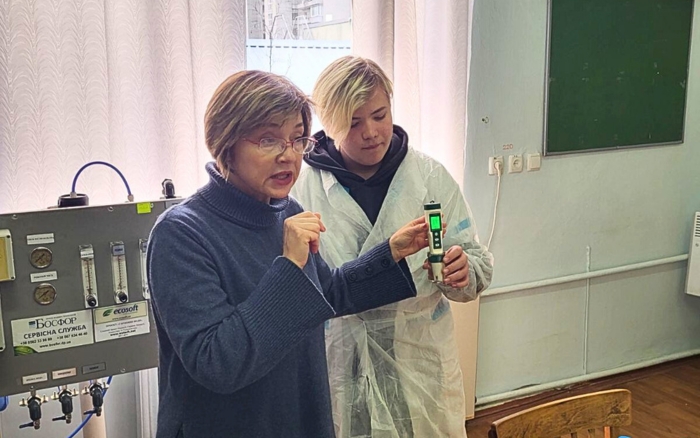
During the lesson, students became familiar with the concept of pH as a key parameter of water quality, which directly affects its safety, corrosion activity, suitability for drinking use and the efficiency of purification processes. This is of great importance for the specialty G1 “Chemical Technologies and Engineering”, in particular for the educational program “Drinking Water and Industrial Water Treatment Technologies in the Production of Inorganic Substances”, where pH control and regulation is a basic technological operation.
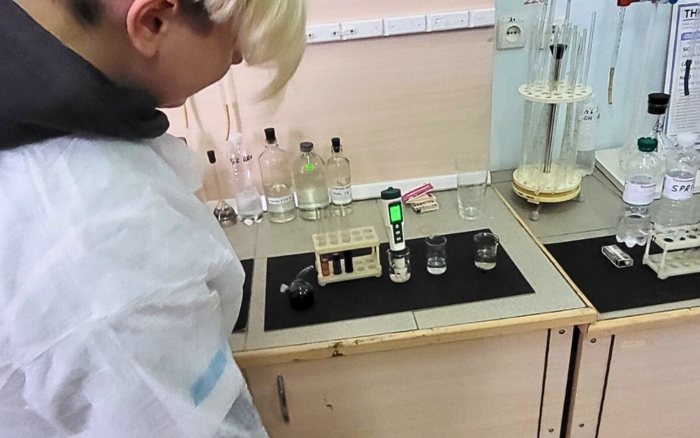
During the laboratory work, students determined the pH of various water samples and solutions using universal indicators, buffer solutions and a digital pH meter, compared the accuracy of the methods and learned to interpret the results obtained. Students were shown how a change in pH can affect the efficiency of coagulation, flocculation, adsorption and other processes typical of water treatment and water purification systems.
This combination of theory and practice allowed students to show the real application of chemical knowledge in the professional activities of a chemical engineer. The lesson became an important element of career guidance work, helping participants to better understand the content of their future profession in the specialty G1 “Chemical Technologies and Engineering” and see prospects in the field of water purification technologies.