
At the USUCT SEI, industry expert Serhii Pavliuk gave a lecture on water treatment in fermentation industries.
On September 22, 2026, second-year students of specialty G13 “Food Technologies” of the SEI “Ukrainian State University of Chemical Technology” of USUST held an online meeting with food production practitioner Serhii Klymovych Pavliuk.
With the participation of lecturers of the Department of Technologies of Natural and Synthetic Polymers, Fats and Food Products, he gave a lecture entitled “Water and Water Treatment in the Technology of Fermentation Products” as part of the discipline “Scientific Foundations of Fermentation Production Technology” of the elective block “Fermentation Production Technologies”. This block is part of the professional training of students of specialty G13 “Food Technologies” at the USUCT SEI and covers, in particular, the technologies of malt, beer and soft drinks, alcoholic beverages, technochemical control, and the scientific foundations of fermentation production.
Serhii Pavliuk is a graduate and postgraduate student of the Department of Technologies of Natural and Synthetic Polymers, Fats and Food Products. He is also a lead auditor of food safety management systems (FSMS) according to DSTU ISO 22000, an auditor of environmental management systems according to DSTU ISO 14001, a GMP auditor according to DSTU EN ISO 22716, and a production certification auditor. DSTU ISO 22000 defines requirements for food safety management systems for organizations involved in the food chain.
The main purpose of the meeting was to show students how theoretical knowledge of fermentation production technology is applied at a real enterprise — from the preparation of the main raw materials to the control of the production process and obtaining the finished product.
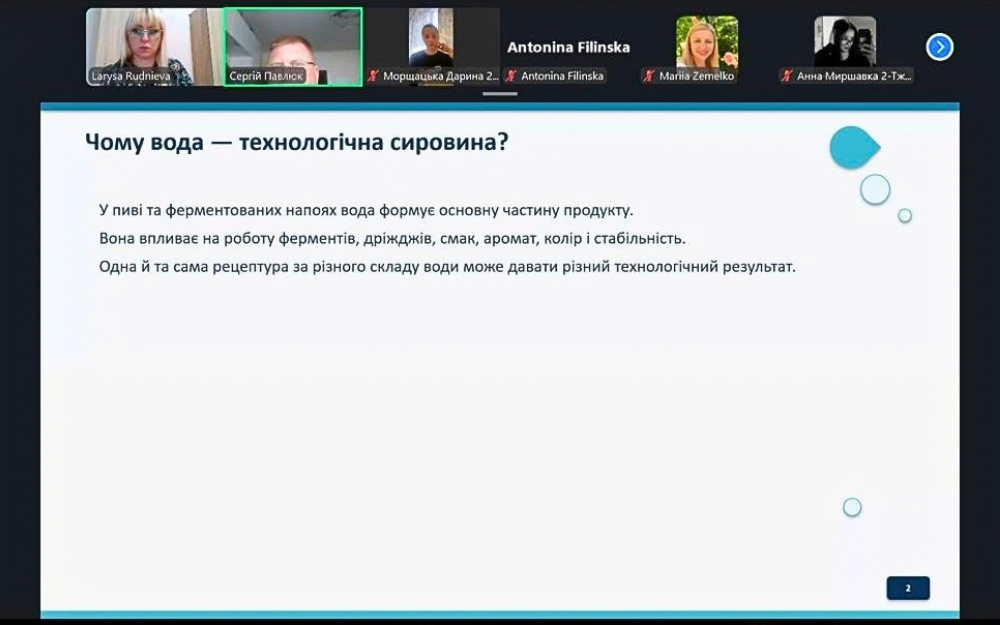
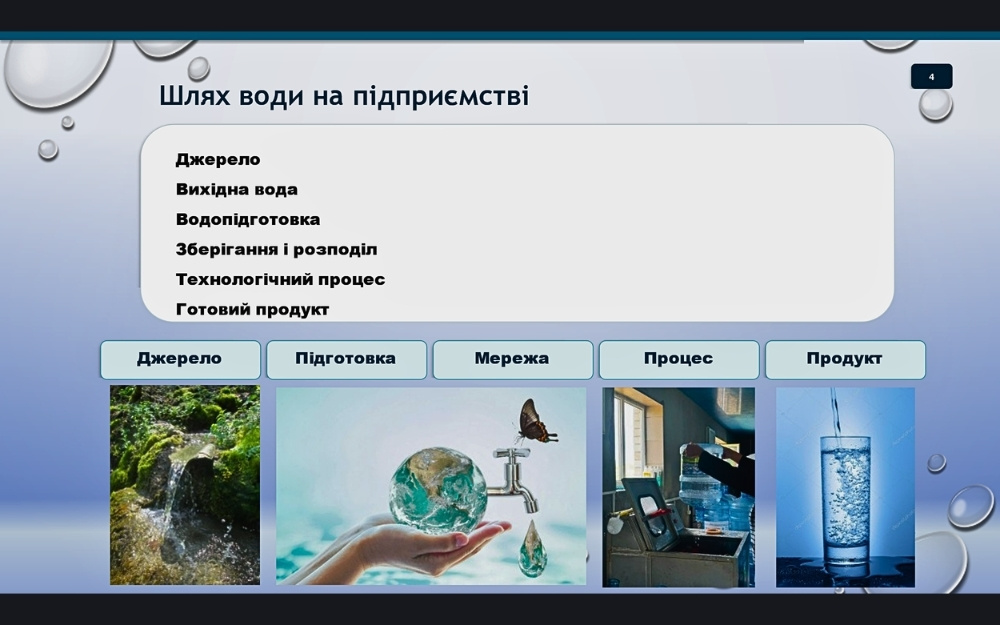
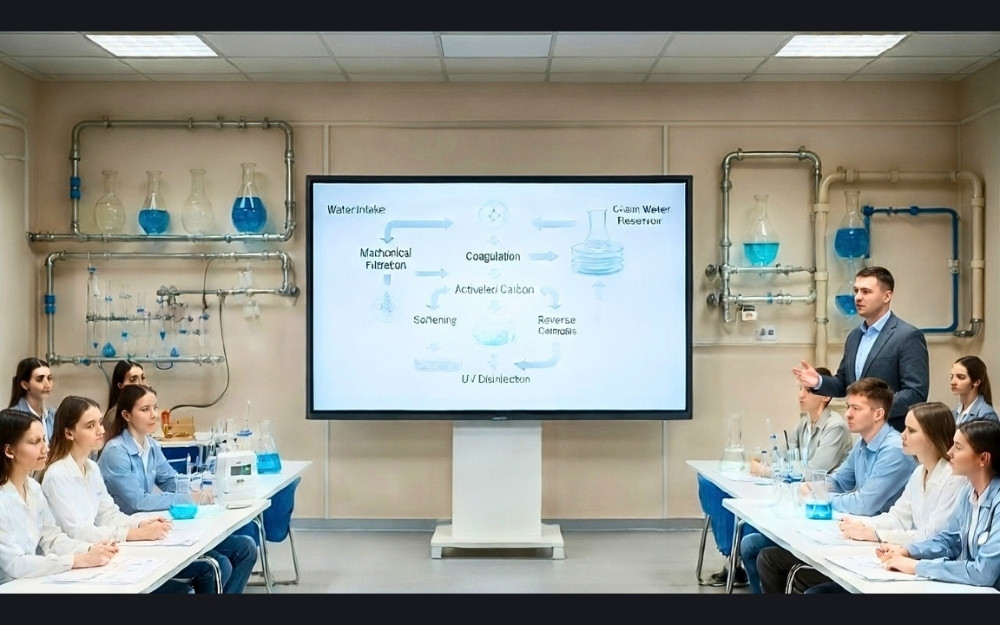
The lecture focused primarily on the use of water in fermentation production and water treatment technologies. Serhii Pavliuk spoke about the sequence of technological operations — from selecting a water supply source and purification to disinfection and water treatment in accordance with the requirements of a specific production process.
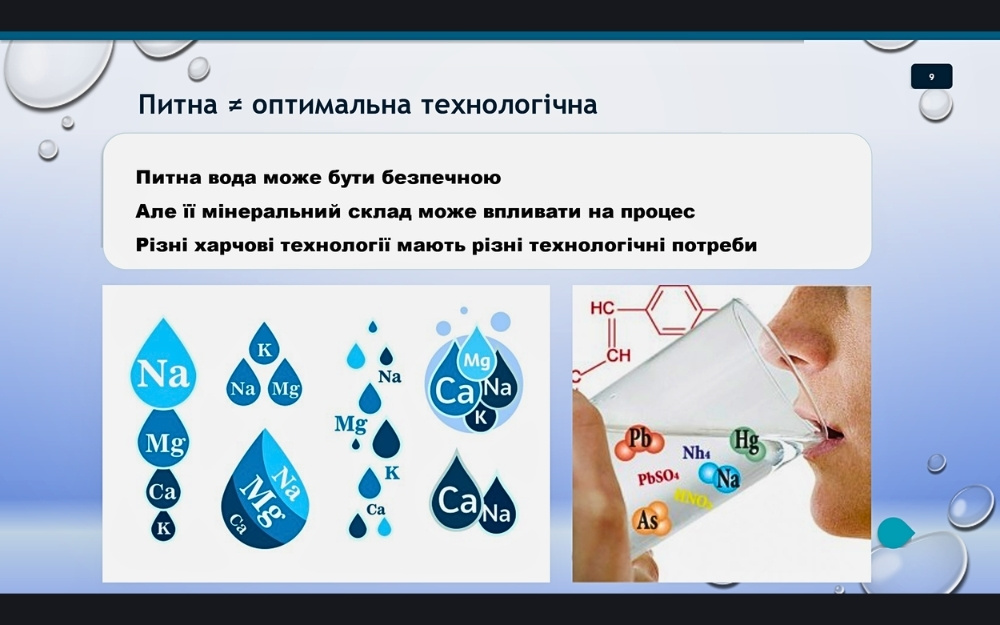
Particular attention was paid to the impact of the composition and properties of water on the quality indicators of finished products. For fermentation production, this is of direct technological importance: water is not only an auxiliary resource, but also one of the components whose characteristics can affect the course of processes and the properties of the final product.
The speaker provided examples of production risks and practical tasks faced by a process engineer, as well as approaches to addressing them, monitoring at various stages of production, and the need to take into account the requirements of standards and modern quality and food safety management systems.
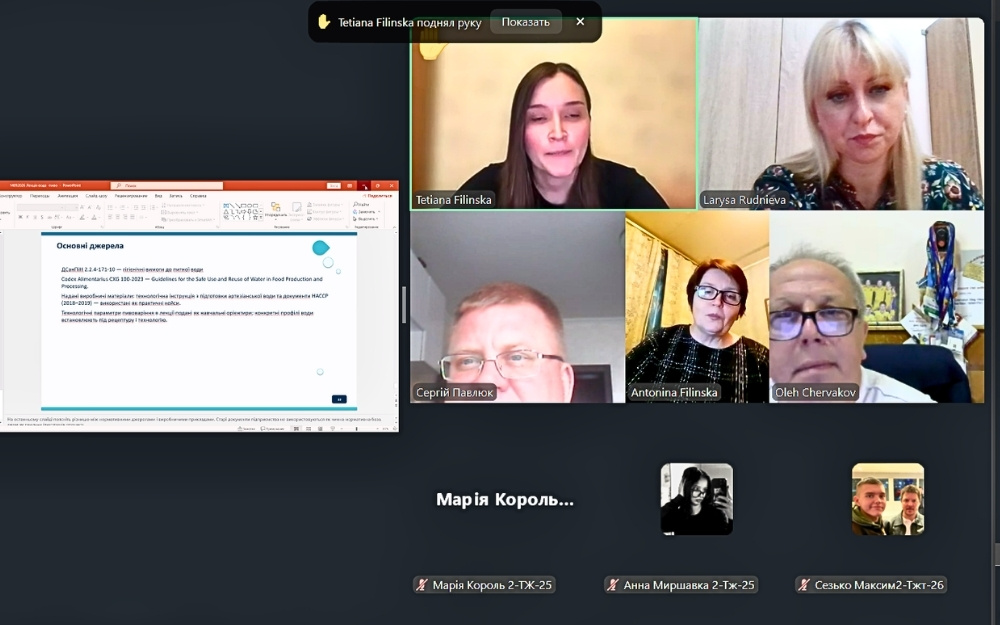

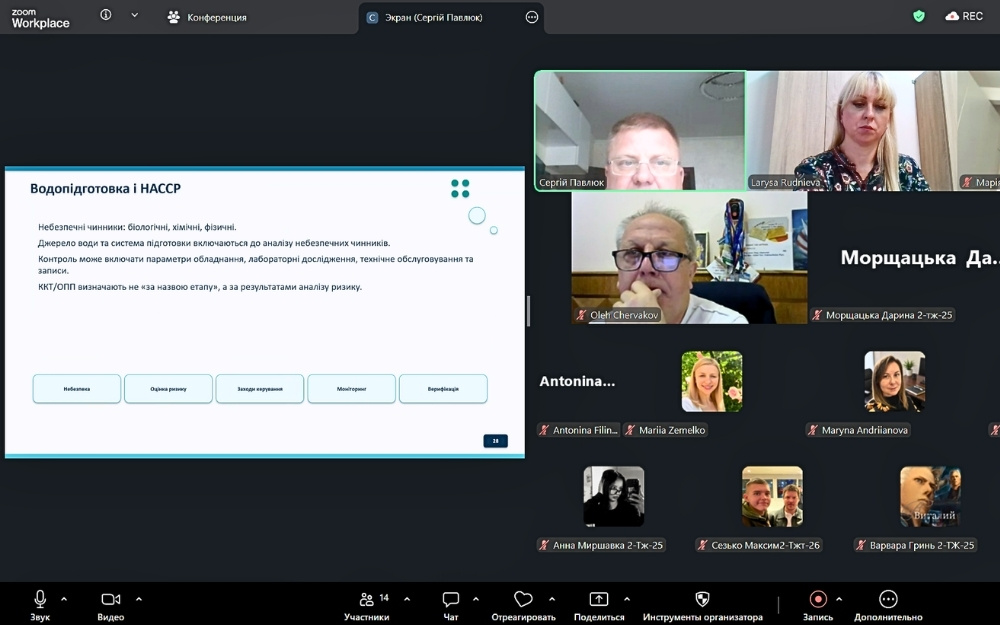
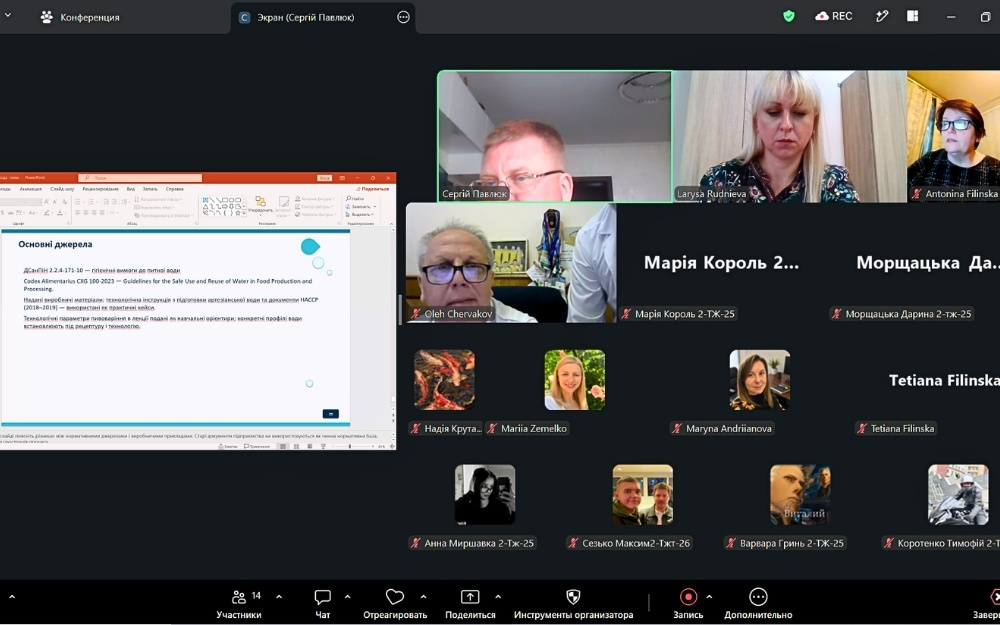
The meeting gave students an opportunity to consider the academic topic from the perspective of real production: to see what decisions a process engineer has to make, what risks need to be taken into account, and how product quality and safety requirements are implemented directly in the production process.
The involvement of industry professionals in the educational process makes it possible to correlate the content of academic disciplines with modern production needs. For the Department, it is also an opportunity to receive professional feedback on the competencies of future specialists and take it into account when improving the practical component of student training.
The fact that Serhii Pavliuk himself is a graduate of the Department and now continues his scientific work at USUST adds particular significance to this cooperation. In 2026, in particular, he became a co-author of a study by university researchers devoted to the prospects of the comprehensive use of oak fruits as food and technical raw materials.
We thank Serhii Klymovych Pavliuk for the professional discussion, practical examples, and willingness to share his experience with students. The Department of Technologies of Natural and Synthetic Polymers, Fats and Food Products continues to involve representatives of the food and chemical industries in the educational process and is open to further professional cooperation.