
Agroquest for schoolchildren at the SEI USUCT showed the impact of human decisions on plant life
On April 10, 2026, at SEI USUCT of the Ukrainian State University of Science and Technology, a class at the Department of Processes, Apparatus, and General Chemical Technology for students of Dniprovska Gymnasium No. 5 of the Dnipro City Council turned into a practical experiment and, at the same time, an intellectual challenge.
Within the framework of the educational project “Green-Ed. Green Education of Dnipro”, students engaged with the topic “AgroQuest: How Your Decisions Change Plant Life”, which allowed them to look at plant cultivation much deeper than it may seem at first glance.
Participants were offered a simple yet illustrative model: three identical soil samples, identical care conditions, and only one variable — the pH level. At first glance, the differences were almost imperceptible, but this very factor determines whether a plant receives the necessary nutrients for development. This approach clearly demonstrated that in technological processes, the decisive factors are often those that cannot be assessed “by eye.”
During the session, students not only observed but also analyzed and drew their own conclusions. An experiment with a natural indicator based on hibiscus (karkade) helped them understand how the properties of an environment change and why even minor deviations can affect the final result.
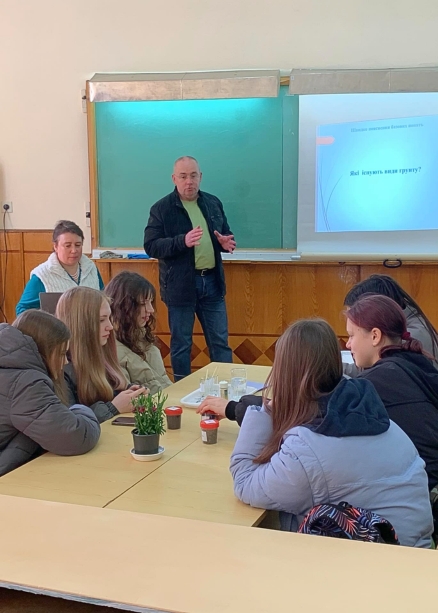
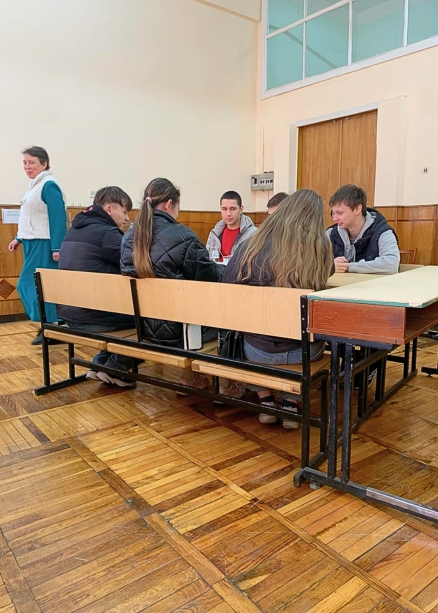
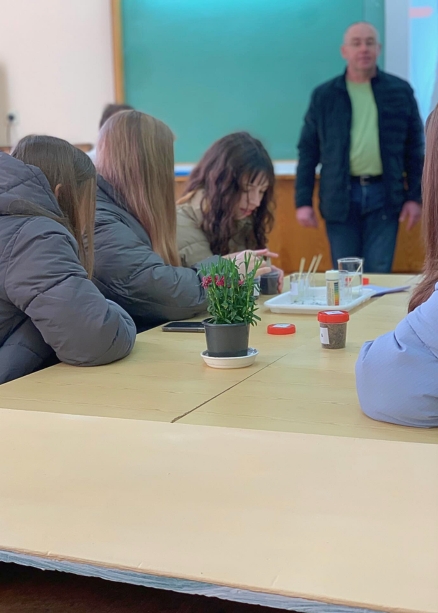
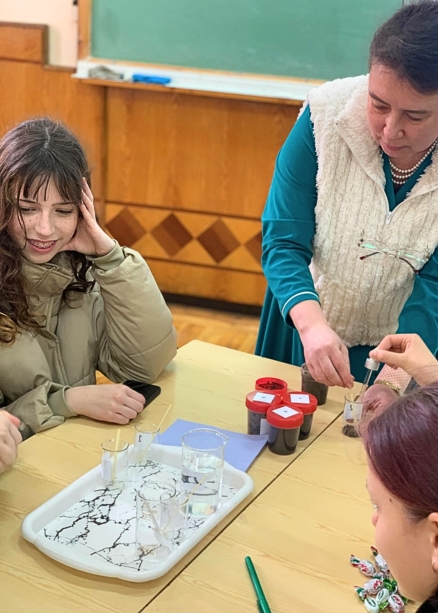
The discussion went far beyond the boundaries of biology. It touched upon cause-and-effect relationships, responsibility for decision-making, and the ability to work with factors that are not always obvious. These skills form the foundation of modern technological education.
This approach is characteristic of training within the specialty A5 “Professional Education (A5.39 Agricultural Production, Processing of Agricultural Products and Food Technologies)”, where students learn not only to acquire knowledge but also to apply it to solving practical problems.
The session was conducted by the Head of the Department, Doctor of Chemical Sciences, Professor Yurii Sknar, along with Associate Professors Anna Hura and Irina Sknar.
Such classes demonstrate that modern education is not about memorizing facts, but about the ability to think, analyze, and see connections between phenomena. This is where the path begins toward professions that determine product quality, production efficiency, and environmental sustainability.